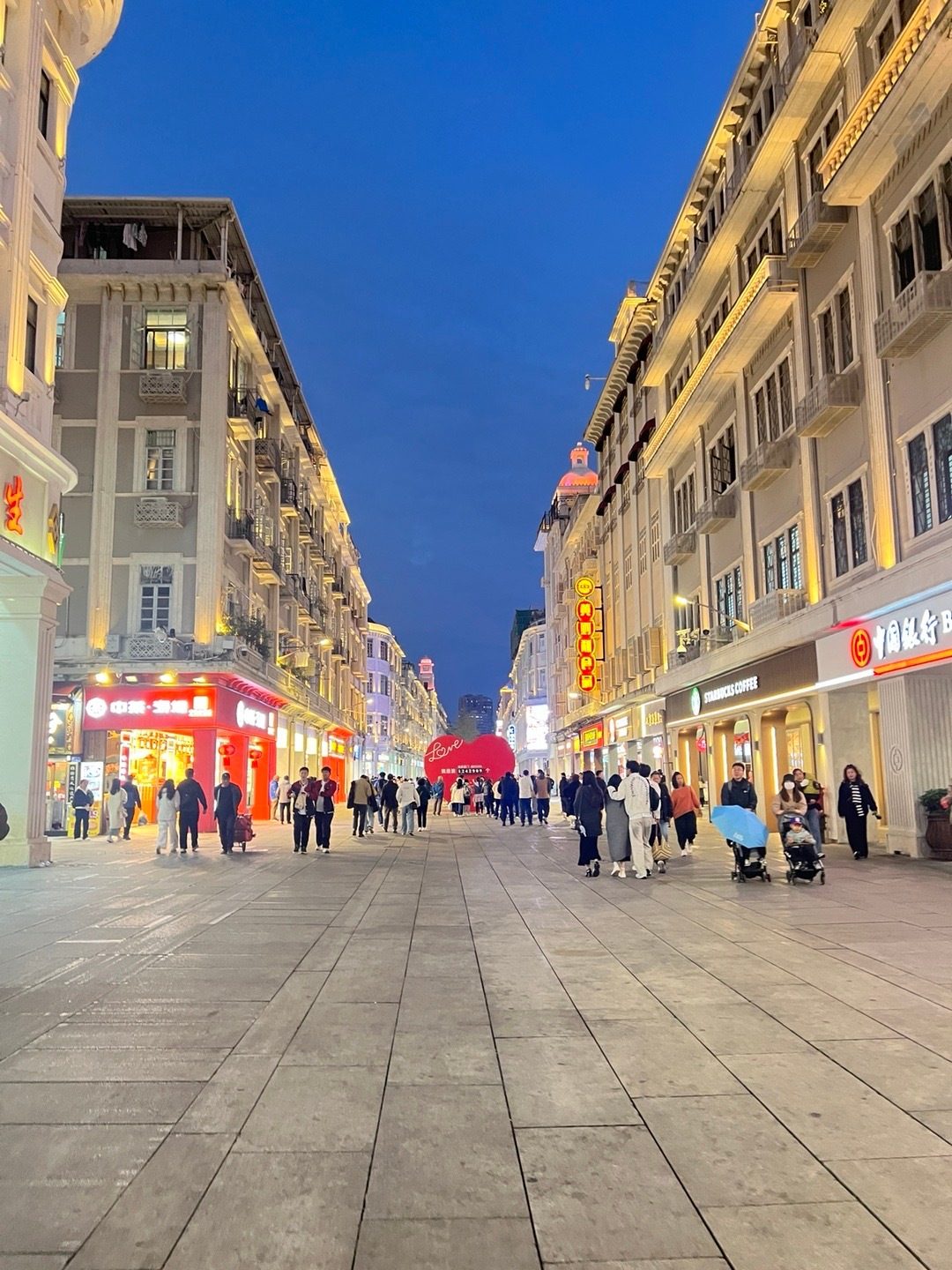
Be at the Eighth Market by 7 am, have breakfast in the lanes, walk the length of Zhongshan Road to the waterfront before the shops fill, then take a taxi to Shapowei for coffee and the harbour. Three hours, flat, and free.
The Eighth Market, early
Bashi means “market number eight”. It occupies a knot of lanes around Kaihe Road and Yingping Road, a few minutes inland from the First Wharf, and has done since the 1920s and 30s.
It is a wet market in the full sense. Tubs of live crab and mantis shrimp line the pavement, with eels, razor clams, cuttlefish and half a dozen kinds of sea snail beside them. Xiamen is surrounded by water and the market shows what comes out of it that morning. Between the fish stalls are sellers of pickles, dried goods, fruit, and cooked food to take away.
The lanes are narrow and wet underfoot. Delivery scooters push through. Wear closed shoes, keep to one side, and ask before photographing a stallholder. Most do not mind.
Come between 6 and 8. By 10 the best is sold. Parts of the market close at midday and open again from about 3:30.
Breakfast in the lanes
This is the reason to come hungry.
- Mianxianhu. A thin wheat-vermicelli porridge, ladled out with your choice of toppings: sausage, shrimp, oyster, fried dough. White pepper on top.
- Wuxiang. Five-spice pork rolls wrapped in tofu skin and fried, cut into pieces and eaten with a sweet chilli dip.
- Manjiangao. A thick, chewy pancake folded over crushed peanuts and sugar, sold by the slice.
- Shacha noodles. The city's signature bowl. See our food guide for how to order one.
Buying seafood to eat
Several small restaurants around the market will cook what you buy for a fee. It can be an excellent lunch. It is also where visitors most often feel cheated, and the advice from people who have done it is always the same. Ask the price per jin, which is 500 grams, before the seller picks anything up. Watch the weighing. Agree the cooking charge per dish before you sit down. If any of that is awkward, eat at a restaurant with a printed menu instead.
Zhongshan Road
From the market it is a few minutes' walk south to Zhongshan Road, the old commercial spine of the city. Work on it began in 1925, during a burst of rebuilding paid for largely by money sent home from Southeast Asia, and the street was finished about five years later. It runs for 1.2 km down to the water opposite Gulangyu.
What makes it worth walking is the qilou. These are shop-houses whose upper floors extend over the pavement on columns, forming a continuous covered arcade. The form came back from the tropics with returning emigrants, and it suits the climate: you can walk the whole street out of the sun or the rain. Look up. The facades above the arcades are a mix of baroque plasterwork, Art Deco lines and Chinese motifs, in pink, cream and faded yellow.
At street level it is chain stores, pearl shops and snack counters aimed at visitors. Do not judge Xiamen's food by what is sold on the main drag. Turn into the side streets, particularly those running north towards the market, and the prices drop and the customers become local.
The street is quietest before 10 in the morning and most atmospheric after dark, when the facades are lit. Weekend afternoons are a crush.
At the seaward end you come out at the Lundu ferry terminal. In the daytime this serves residents only. From early evening it is where visitors board the night boat to Gulangyu. The promenade here looks straight across the strait to the island.
Shapowei
Take a taxi for this leg. It is about ten minutes south.
Shapowei is where Xiamen's port began. The sheltered inlet was built up as a typhoon refuge in the 1920s and 30s, and for decades it was packed gunwale to gunwale with fishing boats. The fleet has shrunk but not gone. Wooden boats still tie up here, with the two glass towers of the Shimao complex rising 300 metres directly behind them. It is the most photographed contrast in the city.
The former factory and cold-storage buildings along the quay have become what locals call Art West: studios, design shops, coffee roasters, and a weekend market. Daxue Road and the lanes behind it are the centre of Xiamen's cafe culture.
Not everyone is charmed. One recent visitor called it “some very ordinary snack shops and a smell of fish”. That is fair if you arrive expecting a sight. Shapowei is a place to sit down. Get a coffee by the water in the late afternoon and watch the light change on the towers.
From here it is a short walk to Nanputuo Temple and the university, and Baicheng beach, where the seafront boardwalk begins, is just round the corner.
Putting it together
| Time | Where | What |
|---|---|---|
| 6:30–8:00 | Eighth Market | Walk the lanes; breakfast |
| 8:00–9:30 | Zhongshan Road | Arcades, side streets, the waterfront |
| 9:30 | Taxi | Ten minutes south |
| 9:45–11:00 | Shapowei | Harbour, Art West, coffee |
If you are not an early riser, turn it round. Start at Nanputuo in the morning, reach Shapowei for lunch, and come to Zhongshan Road at dusk. You lose the market at its best but gain the lit arcades, and the evening ferry to Gulangyu leaves from the end of the street.
Practical notes
- Everything here is level and paved. The market lanes are slippery.
- Small stalls take mobile payment and cash. Some take WeChat only, so carry a few notes.
- Navigation apps like to send walkers through residential back lanes in this district. If in doubt, stay on the named streets.
- Rain is no obstacle on Zhongshan Road, which is covered almost the whole way.
- Metro Line 1 stops at Zhenhai Road, at the southern edge of the old town.
Quick answers
What is the Eighth Market in Xiamen?
Bashi, the city's old wet market, in the lanes around Kaihe Road and Yingping Road near the First Wharf. It dates from the 1920s and 30s and is known for seafood.
What time should I go to the Eighth Market?
Between about 6 and 8 in the morning, when the seafood is freshest and the lanes are busiest. Many stalls wind down by late morning and reopen in the afternoon.
Is Zhongshan Road worth visiting?
For the architecture, yes: about 1.2 km of arcaded shop-houses from the 1920s. For food, the side lanes are better than the main street. Go in the morning or after dark.
What is Shapowei?
Xiamen's old typhoon-shelter harbour at the south-west tip of the island. Fishing boats still moor there, and the former factory buildings beside it hold cafes, design shops and weekend markets.
How do I avoid being overcharged for seafood in Xiamen?
Ask the price per jin (500 g) before anything is weighed, watch it being weighed, and agree the cooking fee in advance if a restaurant is preparing market seafood for you.
Can I walk from Zhongshan Road to Shapowei?
You can, but it is a few kilometres. Most people take a ten-minute taxi and save their legs for the two neighbourhoods themselves.
Keep planning
Sources we checked
- Xiamen Net: Zhongshan Road history, January 2025 (Chinese)
- People's Daily Fujian: Shapowei, January 2022 (Chinese)
- Xiamen Ferry Co.: night route from Lundu terminal (Chinese)
Last checked: October 2026. Tickets, ferries, opening hours and entry rules change; we confirm the current arrangement for your dates before you travel.
Walking the old town with someone who eats there
A guide makes the market legible: what the stalls are selling, what to order, what it should cost. Tell us your dates and we can plan a morning around it.