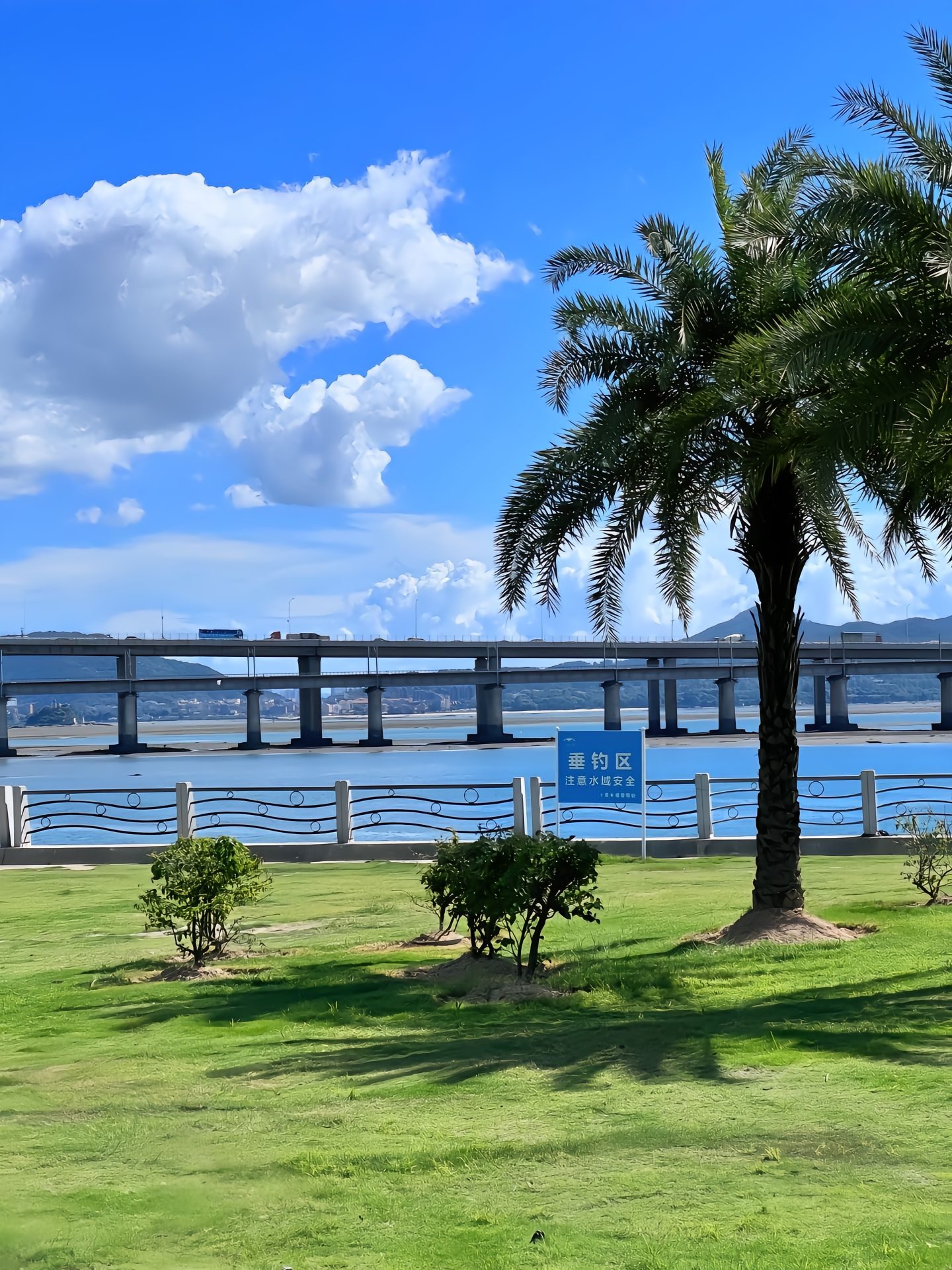
Fly to Xiamen Gaoqi (XMN), 20 to 30 minutes by taxi from the centre. Or take a high-speed train to Xiamen North: about three and a half hours from Hong Kong, two and a half to three from Shenzhen, five from Shanghai.
By air
Gaoqi International Airport is on the north shore of Xiamen Island, about 10 km from downtown. It carried some 29 million passengers in 2025, about 3.4 million of them international. Terminal 3 handles all international flights and those from Hong Kong, Macau and Taiwan, plus some domestic airlines. Terminal 4 is domestic. A free shuttle links them, and the split between airlines shifts, so read your booking.
From overseas, fly direct if your city has a route. Otherwise connect through a hub such as Hong Kong or Shanghai. From Beijing, Xi'an or Chengdu, fly: the train is a whole day.
What to do once you are through the doors, including where the ride-hailing pickup points are, is in airport to city. Travellers eligible for the 240-hour visa-free transit can enter at Gaoqi.
By train
Two stations, a long way apart
Xiamen North (Xiamenbei) is where nearly all the fast trains go. It is in Jimei District on the mainland, on Metro Line 1 and BRT Line 1, and 35 to 45 minutes from the old town by car.
Xiamen is the old station, on the island, on Metro Line 3. It is far more convenient and has far fewer high-speed services.
They are 23 km apart. One traveller planning a same-day connection wrote that she only realised the two were different places when she checked the timetable. Look at the ticket.
How long it takes
Fastest times we found in October 2026. Slower trains on the same routes can take much longer.
| From | To Xiamen North | Worth knowing |
|---|---|---|
| Quanzhou | 17–26 min | Three Quanzhou stations. Only one is near the old town |
| Fuzhou | About 1 hour | On the 350 km/h line opened in 2023 |
| Wuyishan North | About 2 h 10 min | Direct |
| Shenzhen North | About 2.5–3 hours | Frequent |
| Guangzhou South | About 3 hours | |
| Hong Kong West Kowloon | About 3.5 hours | Direct, a few a day |
| Hangzhou East | About 4–4.5 hours | |
| Shanghai Hongqiao | About 5 hours | Slow ones take 8 |
The line north to Fuzhou opened on 28 September 2023. It is China's first cross-sea high-speed railway built for 350 km/h, and it cut that journey to 55 minutes.
From Hong Kong
The direct train from West Kowloon is the comfortable way to combine the two cities. Both sets of border checks, Hong Kong and mainland, are done inside West Kowloon station before you board, so arrive early. There are only a few direct trains a day. If they are full, take any train to Shenzhen North and change. Services from there to Xiamen are frequent.
From Shanghai
Train or plane, it is close to a draw. Five hours on the fastest train plus the transfer from Xiamen North at the far end. Flying is quicker in the air and slower at both airports. If you like watching the coast go by, take the train.
Tickets
Sales generally open 15 days ahead. Your passport is your ID and, at the gate, your ticket. Around the National Day week, Chinese New Year and the first days of May, popular trains sell out, so book the moment sales open.
By sea
Cruise ships dock at the Xiamen International Cruise Center on the west side of the island, on Metro Line 2. The tourist ferry to Gulangyu leaves from the same complex. Foreign tour groups arriving by ship and received by a Chinese travel agency can enter visa-free for up to 15 days. See our cruise port guide.
Once you are here
You will mostly use DiDi, which has an English interface and takes foreign cards. The metro is useful for two things, Jimei and Xiamen North station, both on Line 1. Buses and the metro need a transit code set up inside Alipay, which is not the same as the payment code. Do it before you fly. All of this is in getting around Xiamen.
Which way would we come?
From Hong Kong or Shenzhen, by train. From Shanghai, whichever is cheaper on the day. From anywhere further, by air. And if you are coming for a week, consider arriving in Xiamen and leaving from Fuzhou or Wuyishan in the north of the province, so you do not double back. Our seven-day route shows how.
Quick answers
Which airport does Xiamen use?
Xiamen Gaoqi International Airport (XMN), on Xiamen Island about 10 km from the centre. A new airport, Xiang'an International, is officially scheduled to open around the end of 2026 and is planned to take over passenger flights. As of October 2026 it had not opened.
Is there a metro from Xiamen airport to the city?
Not from the Gaoqi terminals. The nearest station is Gaoqi on Line 1, linked to the terminals by a shuttle bus. A taxi to the centre takes 20 to 30 minutes and is the simplest option.
How long is the train from Hong Kong to Xiamen?
Direct high-speed trains from Hong Kong West Kowloon to Xiamen North took about three and a half hours when we checked in October 2026. There are only a few direct trains a day.
Which Xiamen railway station should I use?
Most high-speed trains use Xiamen North, on the mainland side in Jimei District, connected to the island by Metro Line 1. Xiamen station is on the island and handles fewer high-speed services.
How long is the train from Shanghai to Xiamen?
The fastest high-speed trains from Shanghai Hongqiao to Xiamen North took about five hours when we checked. Slower services take up to eight.
Can foreigners buy Chinese train tickets?
Yes. A passport is valid ID for rail tickets, and you show the same passport at the station gate.
Keep planning
Sources we checked
- National Railway Administration: Fuzhou-Xiamen-Zhangzhou high-speed railway opens, 28 September 2023 (Chinese)
- Ministry of Transport: Xiamen Xiang'an airport progress, April 2026 (Chinese)
- Fujian Provincial Government: Fujian ports under the 240-hour transit policy (Chinese)
- Xiamen Ferry Co.: official operator site (Chinese)
Last checked: October 2026. Tickets, ferries, opening hours and entry rules change; we confirm the current arrangement for your dates before you travel.
Arriving in Xiamen soon?
Send us your flight or train details. We can arrange a private transfer with an English-speaking guide and plan the days that follow.